

Following public outcry, the city of Lampasas’ Planning and Zoning Commission voted to deny a single-family attached rezoning request for property along Naruna Road. The action came during Thursday’s regular meeting of the P&Z.
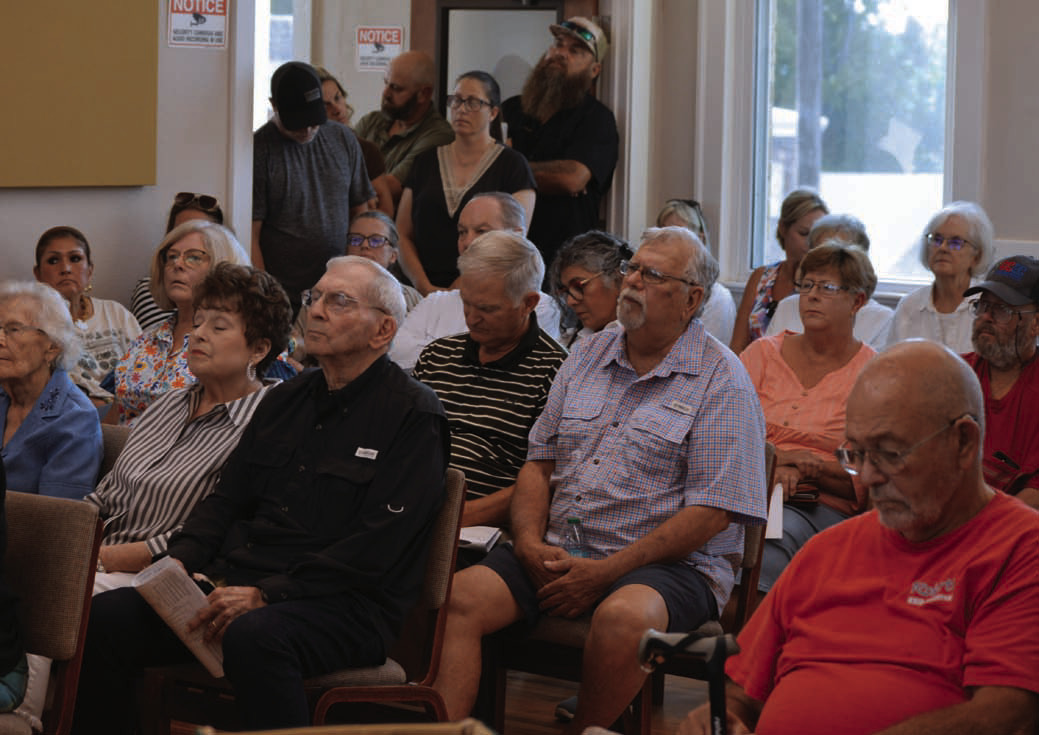
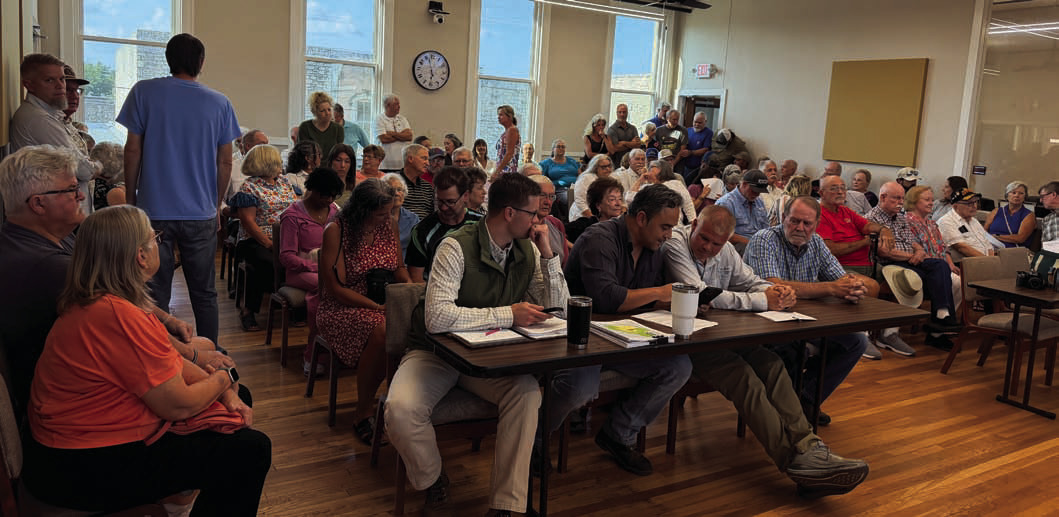
Council Chambers inside the Jack Calvert Municipal Building were at standing-room-only capacity. Many residents such as Robbis Storm were not afraid to voice their displeasure on the proposed zoning change.
“We don’t need it; we don’t want it. Let’s follow Nancy Reagan. She said, ‘Just say no! Just say no! Just say no!’” Storm said as he turned to the crowd, receiving raucous applause.
David Smith II, the property owner at 1516 Naruna Rd., had asked the commission to change the zoning from single-family residential to single-family attached. The change would allow his 2.99-acre tract to become eligible for a planned development consisting of 22 lots, or 11 duplex structures, pending plat approval.
Before residents made their opinions known to the commission, City Secretary Kayleigh Stanley read a letter signed by city staff. Signatories included Stanley, Fire Marshal Bart Baker, Public Works Director Stephen Sewell and Interim City Manager Erin Harrison.
The letter noted that the existing water system does not provide enough flow for fire protection to support the development. However, the letter said with improvements to the water system and an approved fire suppression system in every dwelling unit, the development could meet fire protection requirements.
“Staff recommends approval of the preliminary plat contingent upon completion of the identified minor water system improvements and installation of fire suppression systems in each dwelling unit in accordance with applicable codes and standards,” Stanley told the P&Z Commission members.
She added that the city mailed notices to 21 property owners who are within 200 feet of the proposed development. The city received two letters in favor of the project, and 19 against – 15 of which came from property owners who received the notice.
PUBLIC COMMENTS
Just over two dozen residents stepped up to the podium during Thursday’s public hearing to voice their opinions on the zoning change, with each one speaking against the proposal.
Meaghan Martin, a Yellowstone Drive resident, felt the highdensity development didn’t belong on Sheppard Lane.
“The roadway is narrow, and the condition of the road already presents challenges for everyday travel,” Martin said. “Adding the volume of traffic associated with the dense residential development along with the neighborhood entrance on Sheppard Lane raises legitimate concerns regarding traffic flow, safety and accessibility for current residents, as well as emergency vehicles.”
Another resident in the Diamond Ridge subdivision, Lauren Dowdy, said the rural feel to the neighborhood would cease to exist. Also, Dowdy felt the development went against the Lampasas Comprehensive Plan adopted in 2021.
“The city’s comprehensive plan speaks about compatibility between land uses and preserving the character of existing neighborhoods,” she said. “Those principles exist to ensure the growth strengthens our community instead of creating conflict between what is existing there and new development.”
June Bynum, a Naruna Road resident, had concerns with an increase in traffic on her roadway.
“It is already congested, and with the new Post Oak Ridge State Park opening, there is even going to be more traffic on that road,” Bynum said. “And there has also been some issues of low water pressure. I just don’t think it would be a very good environment for our single-family neighborhood.”
Chuck Lowery told commission members the duplex development likely would cause nearby estate lots to decrease in value.
“I hope you have done an ROI, a return on your investment, to understand if this happens and you lower our property values, you are going to lower taxes,” he said. “If you are going to lower our taxes, you better hope whatever you are putting in will make up that dough, ’cause I don’t think it will.”
DEVELOPER RESPONSE
After 40 minutes of public comments, commission members heard from the side seeking the zoning change. Pedro Quintero, of Quintero Engineering, represented Smith in the discussion. “We are not doing duplexes; we are not doing low-income housing. It is not going to be a slum-lord rental property,” Quintero said. “We are doing singlefamily attached. Each unit will be on its own lot. Each unit will be owned by its own owner. It is a smaller lot that attracts young professionals and even those that can’t maintain a bigger yard.” Quintero said each lot would contain a 1,300-square-foot residence with three bedrooms and two bathrooms. The engineer believes the development would fulfill the need for housing listed in the comprehensive plan.
“Part of the comprehensive plan, one of the housing types that was mentioned that they don't need any more of was these large estate lots – they want smaller lots,” he said.
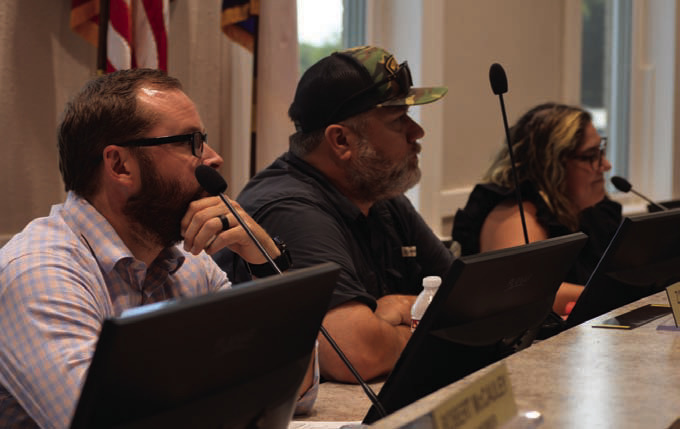
Planning and Zoning Commission Chair Marisa Canales said the development failed several rules for development in the comprehensive plan. These include: less congestion in the street; secure safety from fire, panic and other dangers; prevent the overcrowding of land; avoid undue concentration of population; and facilitate adequate provision of transportation, water, sewer, parks and other public requirements.
Commission member John-David Rott also felt developers hadn’t adhered to the comprehensive plan, despite Quintero’s use of the document as evidence for the need of the development.
“Your plan is inconsistent with the suburban residential future land use designation,” Rott said. “On page 61 of the adopted comprehensive plan, it prioritizes single-family detached development and limits attached units to transitional locations.”
All members of the P&Z Commission who were present voted against the zoning change from singlefamily residential to single-family attached. Members Michael Sibberson, Janet Logan and Robert McCauley were absent from the meeting.