

Discovering the legacy of Cook Cemetery
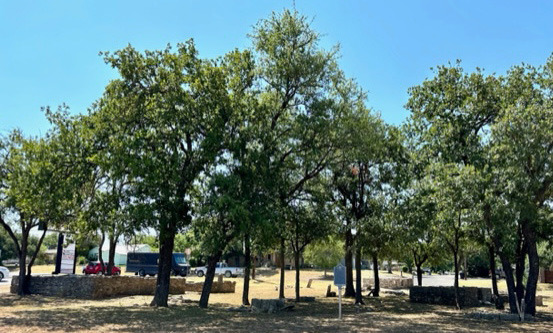
Beneath a smattering of oaks and elms lies a small cemetery surrounded by the busyness of life. Some new Lampasas citizens have never noticed it, while those who have been here for generations have grown so used to it they never think of it.
Some, however, have been curious about this seemingly abandoned graveyard that sits on the edge of a parking lot in a shopping center along the highway.
The most important thing to remember about this little Cook Cemetery is that what lies tucked into the earth are the remains of real people. People who walked on Lampasas soil, survived grueling Lampasas summers, and had hopes and dreams for their future.
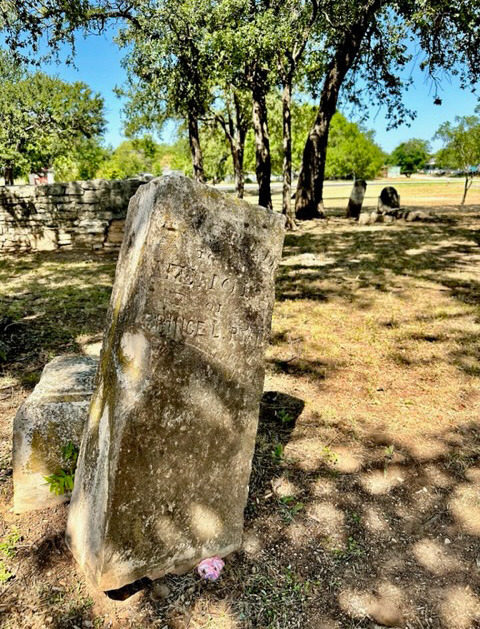
Many of those whose remains lay in this ground died young, and some died horrible deaths. The latter is the case of a 15-year-old boy whose grave is marked with a faded headstone.
Prince L. Ryan was born on Jan. 24, 1853, and he was murdered on Jan. 30, 1868 by a raiding band of Comanche Indians only six days after his 15th birthday.
According to past Texas state historian Bill O’Neal, in his book “Lampasas, Biography of a Frontier Texas Town,” Ryan had gone to find a cow that had strayed from home when “not far from town he was jumped and killed by raiders.”
Jonnie Ross Elzner also mentions Ryan in her book, “Lamplights of Lampasas County.” She writes: “The Cook and Ryan families lived south of Sulphur Creek near the present Chestnut Street. One morning Prince Ryan came by for his friend, a Cook boy, to go with him to hunt a cow. Mrs. Cook was afraid the Indians might make an attack on the boys, therefore she refused to let her son go. The Ryan boy went alone, but he did not return.”
His body was discovered about a mile from his home.
After Ryan’s death, the 155 years of Texas summers and winters and storms have erased much of the writing on his tombstone, which once clearly read: To The Memory of Prince L. Ryan who was Killed by Indians January 30, 1868 “The Gift of God is Eternal Life” Most people buried in Cook Cemetery were in their 20s and 30s when they died, and including Ryan, six or possibly seven children rest here. Lafayette Brook was 3, almost 4 years old when he died; JS Brown was 3 years old; Elisha French was 1 year and 8 months; and Evan Phelin was 17 days old. Jesse Pratt has a small headstone that simply reads “1867.” There also is a 6-month-old baby that is unnamed but is buried with his or her mother, Mary J. Love.
Some of these little ones no longer or never did have a headstone. That also is true for some of the adults buried here.
The Lampasas County Historical Commission owns Cook Cemetery, and the city is responsible for its maintenance.
Clydell Wallace, the LCHC chairperson, said that because the cemetery is a historical site, “the historical integrity has to be maintained; as such we can’t deviate a whole lot.”
According to the Texas Historical Commission, “historic cemeteries do not necessarily remain permanent reminders of our heritage. Across Texas, they are threatened by development and expanding urban areas, natural forces such as weathering and uncontrolled vegetation, lack of fences to keep cattle from toppling headstones, and vandalism and theft, including removal of headstones and objects. Neglect accelerates and compounds the process.”
One of the most essential things Lampasans can do is to remember that Cook Cemetery is there. By caring for this cemetery, the community is respecting the persons buried there and, simultaneously, sending a message that Lampasas history and heritage matter.
To The Memory
of Prince L. Ryan
who was Killed by Indians January 30, 1868 ‘The Gift of God is Eternal Life.’
tombstone in Cook Cemetery
