

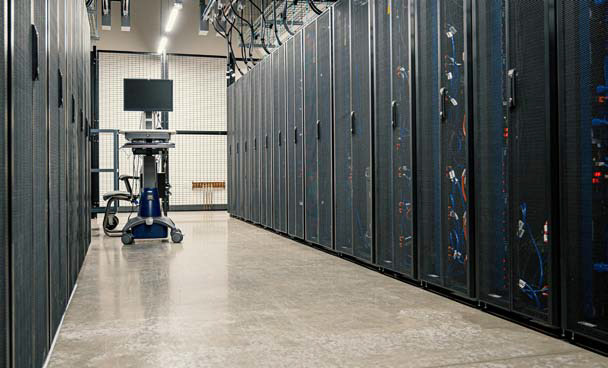
With the rise of data centers across the state, Texas agriculture leaders are pressing lawmakers to evaluate the impact facilities have on water supply.
Last week, Texas Agriculture Commissioner Sid Miller joined the chorus, calling for a statewide pause on data center projects. His comments came days after the Hill County Commissioners Court approved a one-year moratorium on such developments.
“It is time for a temporary moratorium on new hyperscale data center development in Texas until we fully assess the long-term impacts on our infrastructure, agricultural economy and communities,” Miller wrote in his opinion piece outlining the action.
Lampasas County residents also are worried about the possibility of data centers arriving. That concern led the Lampasas County Commissioners Court to authorize in April a resolution against such facilities, highlighting concerns over water and electricity usage.
County resident Mike Watson, an at-large director for the Saratoga Underground Water Conservation District, has heard similar fears. Most of those Watson has encountered who are anxious about the proliferation of data centers are either agriculture producers or retired landowners like himself who run a small ranch operation.
“We’ve had a couple people in our meetings make public comments expressing concerns,” Watson said. “Our board members have had people in their precincts reaching out to them. It is all about the big buzz with water availability and data centers.”
An analysis by the American Farm Bureau Federation released April 23 shows Texas has 580 data centers that are active or under construction — the second-highest total in the nation behind Virginia.
A new research paper from the COMPASS Research Affiliates Program at The University of Texas at Austin estimates data centers consumed roughly 25 billion gallons of water in 2025 through direct cooling and indirect power generation. Although that number represents only 0.4% of statewide water usage, researchers add the impact is far more concentrated in local aquifers and rural areas that already are stressed by agriculture and drought.
For comparison, livestock operations account for close to 2% of Texas’ water demand, more than double the amount used for data centers. By 2040, however, researchers believe data centers could account for 5.7% of the state’s water usage.
Proponents of data centers often underscore that new closed-loop and dry cooling technologies can sharply reduce onsite water consumption. However, researchers note these cooling technologies come with tradeoffs. Minimizing direct water use through air-cooled or heat pump systems increases electricity demand, which in turn raises indirect water use at power plants.
If a data center were to make its way to Lampasas County’s unincorporated areas, the Saratoga UWCD would require a groundwater study as part of its permitting process to ensure the facility does not place a burden on supply.
“As long as their experts can demonstrate that they don’t have an impact beyond the desired future condition of the aquifer -- that is, the level of the aquifer -- then there is not a lot we can do to keep them from doing that because of the right of capture,” Watson said. “But if they’re coming in and wanting a whole lot of water and can’t show it is not going to affect the groundwater levels in the county, then yes, we cannot issue a permit.”
Currently, there are no imminent plans for a data center in Lampasas County. Lloyd McCarley, a local landowner, had been approached by a data center developer interested in part of his acreage on which to construct a facility. McCarley told the Dispatch Record those plans are no longer in motion.
PUSHBACK ON DATA CENTERS
Although data centers are non-existent in Lampasas, two hours north in Hill County residents are feeling their presence.
Hill County Judge Shane Brassell believes government leaders were forced to take action through a moratorium due to their growing presence. He said lawmakers have left the county with few options.
“When we are looking at the size and amount of projects that Hill County is being looked at for, we’re looking at almost -- and this is a rough estimate – 10,000 to 15,000 acres covered in data centers,” Brassell said. “I just don’t know how much is too much for a landscape.”
Before Hill County commissioners approved the moratorium by a 3-2 vote, Brassell said the court received significant feedback from the community on habitat, power and water concerns. The judge believes Hill County was seen as a viable location for data centers because of its proximity to the Dallas-Fort Worth Metroplex, dark fiber infrastructure, and fewer emissions regulations compared to larger metro areas.
Within 24 hours after the court passed its moratorium, Brassell was notified that lawsuits would be filed against the action.
“It was either let our citizens risk having a data center next door to every one of them and have their neck on the line, or the commissioners putting their neck on the line,” Brassell said. “That [moratorium] is what we chose to do.”
Hill County is the only Texas county to approve a moratorium, an authority not expressly granted in state law.
Lampasas County Judge Randy Hoyer believes Hill County’s decision will not bode well for counties when the legislators return to Austin.
“We lose credibility with the state because they are going to turn around and say, ‘If you want more authority, we can’t trust you with what you’ve got right now. You’re a loose cannon doing what you want to do,’ ” Hoyer said.
“A moratorium, I think it does more harm than it does good,” he said. “I think a resolution is good. That is sending a message of what we want and don’t want.”
Hoyer said he believes the state should provide counties with clear, legitimate data on the impacts of data centers.
“I wish the state could come in and provide local authorities with information — legitimate information that can be put out there for educational purposes,” Hoyer said.
As data center development continues to accelerate across Texas, time will tell if such a facility makes its way to Lampasas.