

By Anna Timmis
Dispatch Record
David Klose, 93, remembers waking up before dawn as a young boy in the 1930s, completing his chores on the family farm while his mother made dinner, climbing into the pickup truck with his parents and sister, and riding 100 miles — a great distance to travel at that time — to Lampasas for the Klose family reunion.
To this day, the family continues to gather at the beginning of August. This year is especially significant, because last year, the COVID-19 pandemic kept the family from holding a reunion for the first time in 100 years.
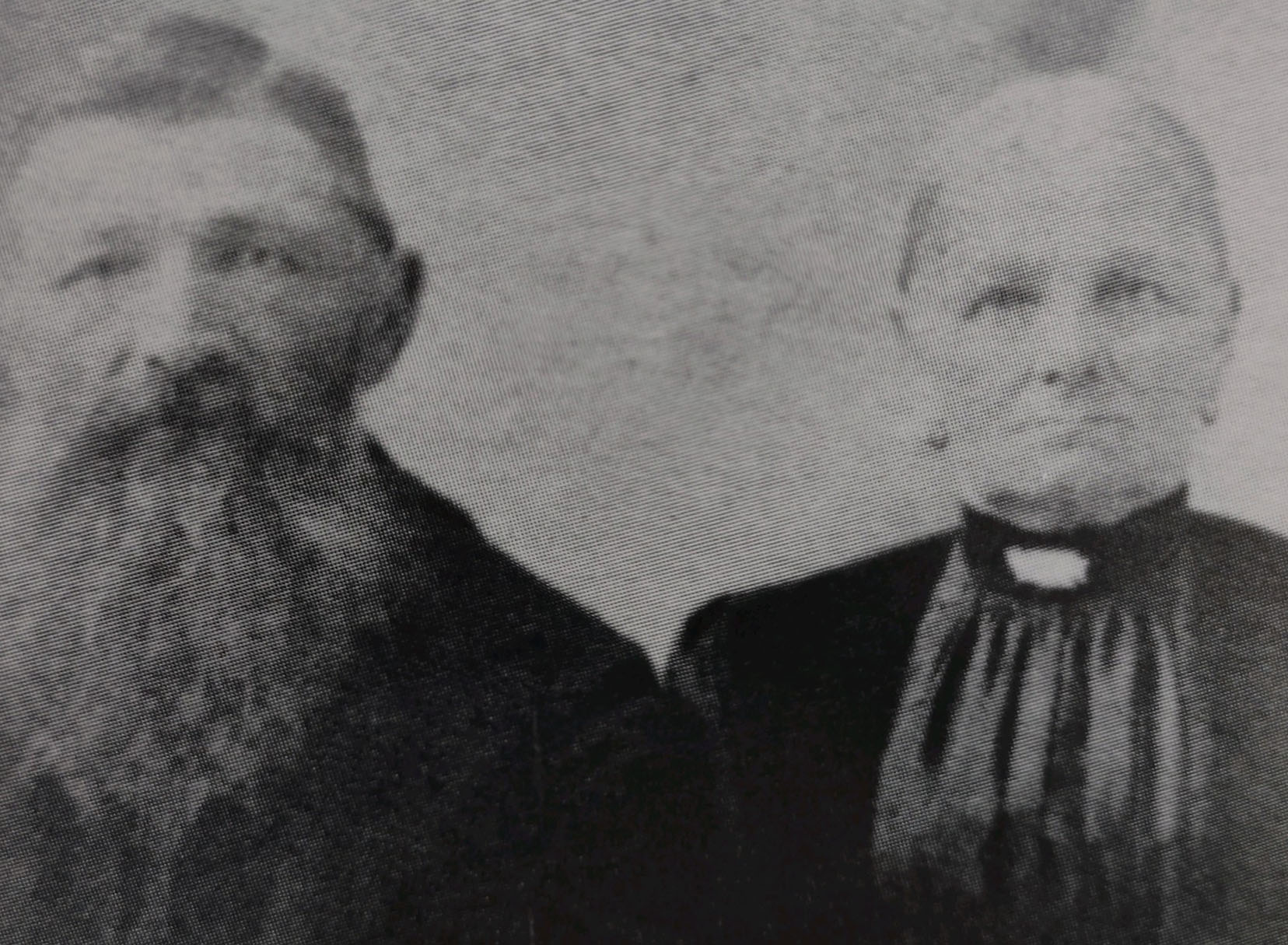
David’s grandparents — Karl Ernest August Klose and his wife, Johanna Dorothea (Polck) Klose — rode on a ship with their children from Prussia to Maryland in 1885. Kevin McCulloch, a great-great-great-grandson of the Kloses — who went by August and Dora — wrote a book about the family’s history.
The book was “the result of a class project that got out of hand,” he said.
He said August and Dora Klose’s family traveled aboard the SS Nurnberg, a steamship that also had sails. The family arrived in Baltimore in January 1885 after a journey of about 17 days. Some in the family experienced seasickness the entire journey. Although they were relatively well-off in what then was Glogau, Prussia, (now Głogów, Poland) they came in the steerage section, which was like a big open dormitory without privacy.
The passengers in steerage had to share one toilet. The ship ran into a storm, and the crates were not tied down. Water poured onto the ship deck, McCulloch said.
Jan Klose, a Lampasas resident and a great-great granddaughter of August and Dora Klose, said the passengers had to throw their belongings overboard except three things: a prized possession, something meaningful and something to earn a living. Her ancestors kept a Bible, an oil lamp and a sausage stuffer. She said the oil lamp “has always sat on our mantle — always.”
From Baltimore, the family of five — August and Dora later had another child — rode the train to Texas and settled in Bertram, hoping for a better life for their children. Prussia was a militaristic state often at war, and every young man had to serve in the military. August’s brothers had fought, McCulloch said, and Dora’s probably did, too.
The Kloses sacrificed social status and comfort when they moved to the United States. David Klose — grandson of August and Dora’s oldest, Frederick William “Will” and his wife, Annie — said in the Kloses’ homeland, August had overseen the property of Kaiser Wilhelm’s in-laws.
August once told David that he “went back [to Germany] every night in his dreams.”
When the Kloses arrived at their new home, August traded one of Dora’s gowns for a cow — she wouldn’t need the gown anymore on their new farm, McCulloch said.
“I would love to have seen the expression on her face when she arrived in Bertram and saw her new home, as it compared to Glogau back in Germany,” he said.
Will settled in Lampasas as a teenager, while his younger brother August moved to Haskell. Their younger sister, Louise Pauline Ernestine — known as “Lizzie” — moved to Lometa.
In 1920, Will and Annie wanted to celebrate their July and September birthdays, so threw a party in August, David said. The family gathered by the creek on their farm, and soon the yearly event became a family reunion, continuing as the generations passed.
Ernestine Miller, 87, is the sister of David Klose. She said she always looked forward to the parties at her grandparents’ house because of the fun she had with her cousins.
Jan is the great-granddaughter of Will and Annie. She still lives in her childhood home, where her parents ran a dairy farm. She and her three sisters live within a few miles of one another.
Klose, who had a 43-year career as a teacher, said that when she was growing up, her parents would warn, “Don’t do anything [naughty], because we have eyes and ears out.” It also was said not to gossip about anyone in Lampasas “because they may be kin to the Kloses.”
Jan, David and his daughter Penny Bradshaw said the Klose women were good cooks. David recalled the fried chicken and potato salad his mother and the other women would make. His grandmother always had sauerkraut, which he and his cousins would sneak from the butter churn.
“My mom was the best cook,” Jan said.
David said his grandmother Annie was always fixing food.
A few years ago, Jan was made chair of the family reunion, and she is organizing this year’s party — which will be Saturday at the Hostess House, with social distancing and masks required. She said she hopes to have 100 relatives attend.
David and Penny anticipate five generations will attend. Family members have designed T-shirts, will have breakfast and lunch together, will pass out awards, and will share family news, Jan said. One cousin will lead family history trivia. Old family photos will be scattered on the tables for guests to view.
“It's going to be a very special time,” Jan said.
David remembers that when he and Ernestine were children, they would take the boards off the side of a wagon and spread the food on the wagon bed. The children sat on the grass to eat. They’d swim in the creek.
As the years passed, Jan said, the party moved to various locations, starting with Hancock Park. Rain on the event led the family to move to the park pavilion. The family members then hosted the reunion in the historic Hostess House, and then they held it at First Street Church of Christ for many years.
The first 100 years of the family tradition have been framed by two pandemics. The first reunion in 1920 happened after the Spanish flu waned, and the coronavirus kept family members apart in 2020.
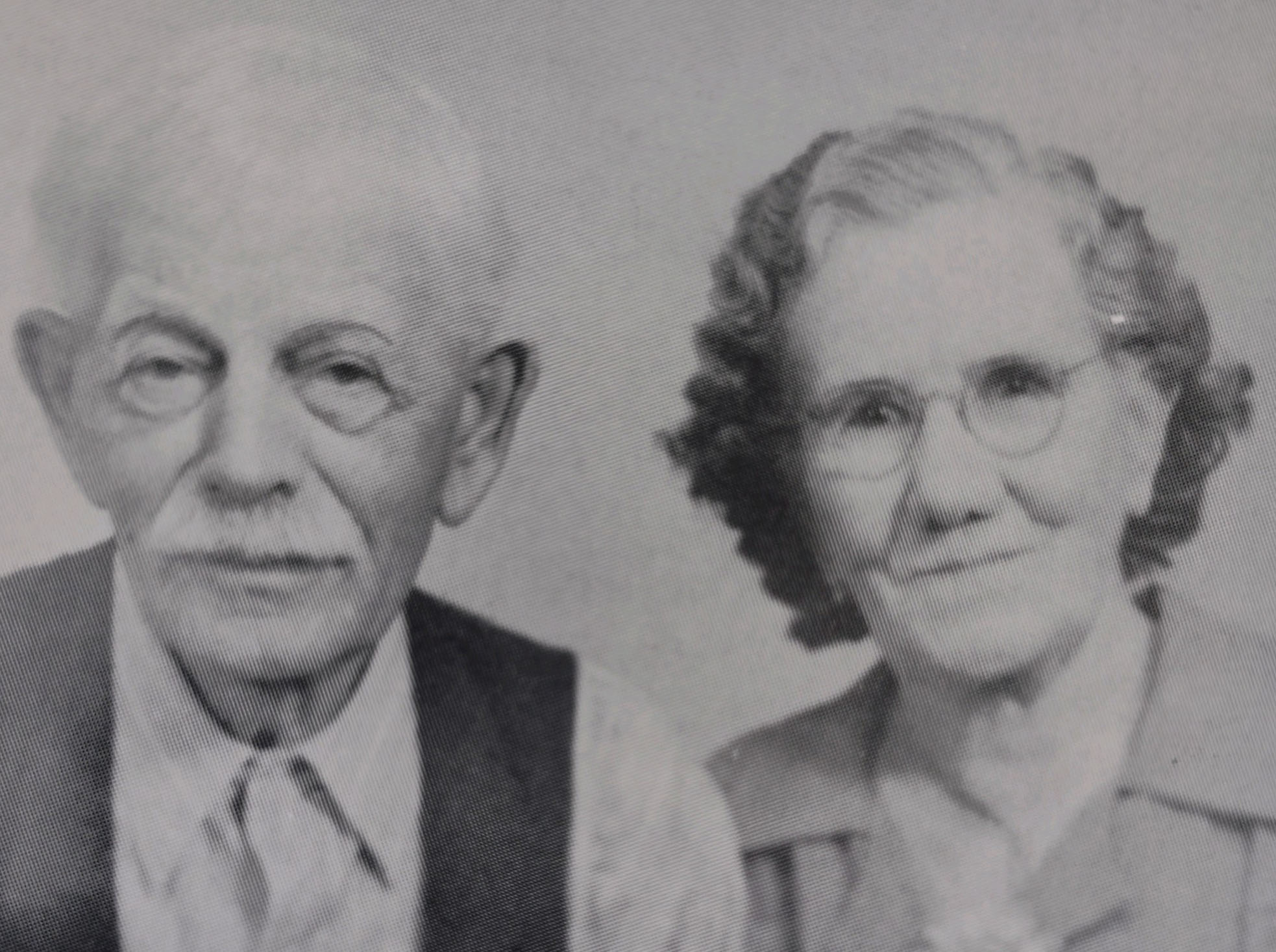
Klose descendants described the kind qualities of their grandfather Will, who died in 1962. Ernestine said he always had a story to tell the children, would tease and joke with them, and always was in good humor.
“He sang us songs in German,” David said. “And of course we didn’t know what the heck he was saying, but it was a big deal.”
Penny said, “I never got to know him, but I’ve always heard what a sweet man he was, and all the kids would come around and just sit.”
“He didn’t have no favorites or nothing; everybody was the same,” David added.
Jan spoke with equal fondness of her parents, saying, “we had the best parents, we had the best grandparents in the world.
“Having a huge family and the support and the friendship, and to get together is awesome,” she added. “There’s really not words to identify it. It’s really a heavenly sent thing.”
David and Ernestine both said they look forward to seeing the relatives, whom they don’t see often.
Saturday’s reunion is from 10 a.m. to 2 p.m. Family members attending are asked to bring a covered dish to share. A silent auction is planned. Family members with questions about the reunion may contact Jan Klose at 512-540-2327.
“It's up to our generation to carry on what’s been carried on for 100 years,” Jan said.
MULTIPLE GENERATIONS OF KLOSES IN LAMPASAS COUNTY
First generation immigrated from Prussia
The Kloses in Lampasas trace their family back to Karl Ernest August Klose (1845-1934) – who was known as August – and his wife, Johanna Dora (Polck) Klose (1842-1917) – who was known as Dora. They lived near Glogau, Prussia.
August and Dora Klose, with their children Frederick Wilhelm, Frederick August and Louise Pauline Ernestine, boarded the S.S. Nurnberg at the port of Bremen, Germany on Jan. 7, 1885 and landed at Baltimore, Maryland on Jan. 24. From there, the family boarded a train headed for Texas and settled in Burnet.
Second generation
The eldest son, Frederick Wilhelm “Will” Klose (1868-1962) began working as a cook on a chuckwagon when he was 19. He took part in several cattle drives that usually took about a year to complete. He recalled Lampasas at that time as being open country with very few buildings.
On Dec. 28, 1892, Will married Annie Bell Hodges (1874-1964) in Williamson County. On June 1, 1916, they bought 440 acres on Big Lucy Creek in Lampasas for $12 an acre. Gradually they added to this farm and had a dairy.
Will retired from farming in 1943 at the age of 75. He and Annie bought a house on Chestnut Street in Lampasas and lived there until the Mother’s Day flood of 1957 forced them to move a few blocks away to Pecan Street, which was on higher ground.
Third generation
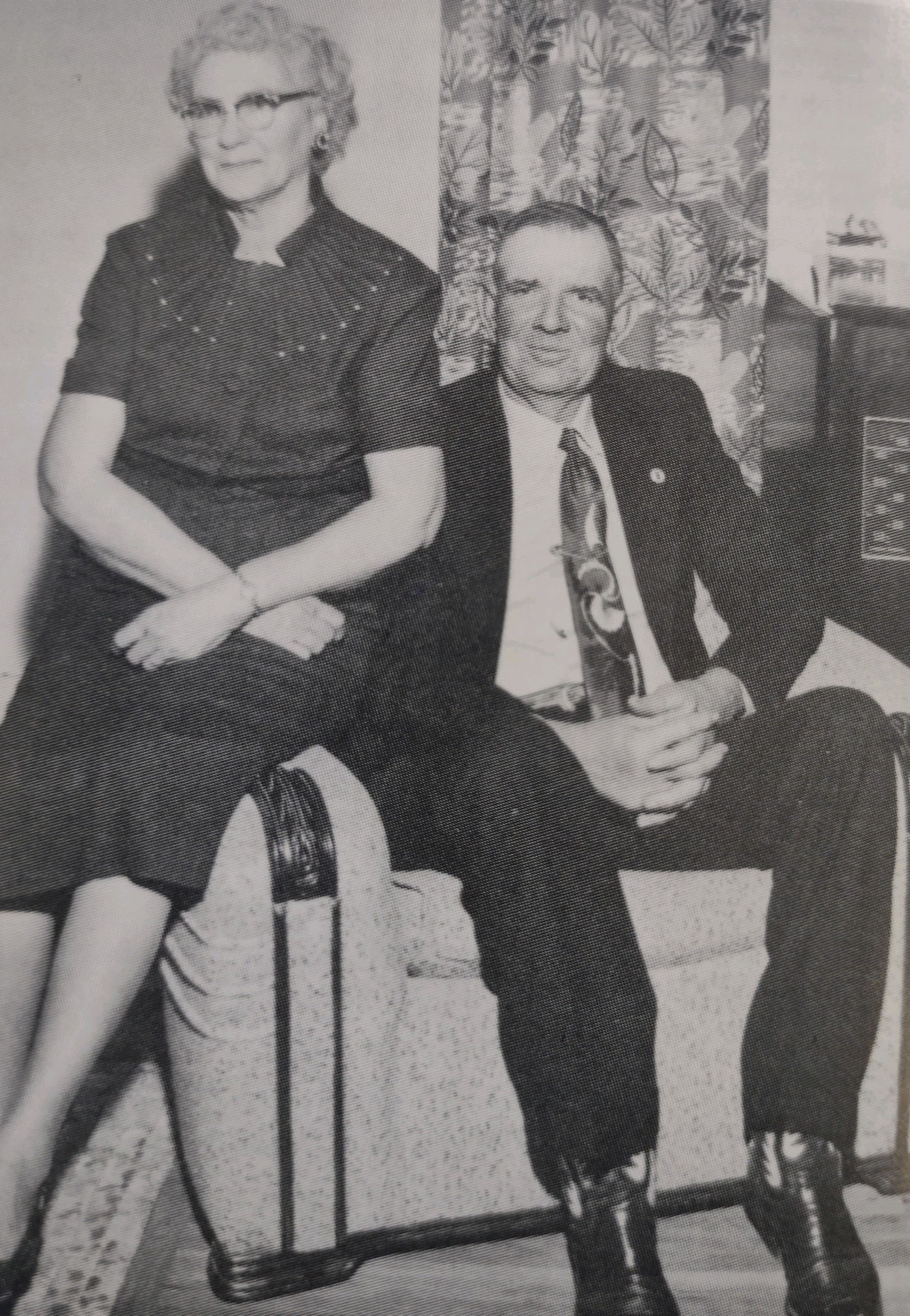
Charlie Fred Klose (1895-1973) was the eldest son of Will and Annie Klose. He was born in Williamson County and moved with his parents to Burnet County between 1900 and 1903. He attended the one-room Providence School that went through the eighth grade.
After he finished school, Charlie set out on his own and leased some acreage with an uncle for a corn crop.
He married Fannie Mae Crooks (1899-1973) on Dec. 24, 1916. They built a two-room house on approximately 111 acres in Lampasas County that they bought from Charlie’s parents. In 1925, they bought their own place that consisted of 401 acres and later purchased 640 adjoining acres where they farmed and raised cattle, sheep, a few hogs and several hundred laying hens.
Fannie also worked some in her son’s Western Auto store, in which Charlie had become a partner in 1956 or 1957.
Charlie and Fannie had three children: Melvin Fred, Marvin Edwin and Fannie Lorene.
Fourth generation
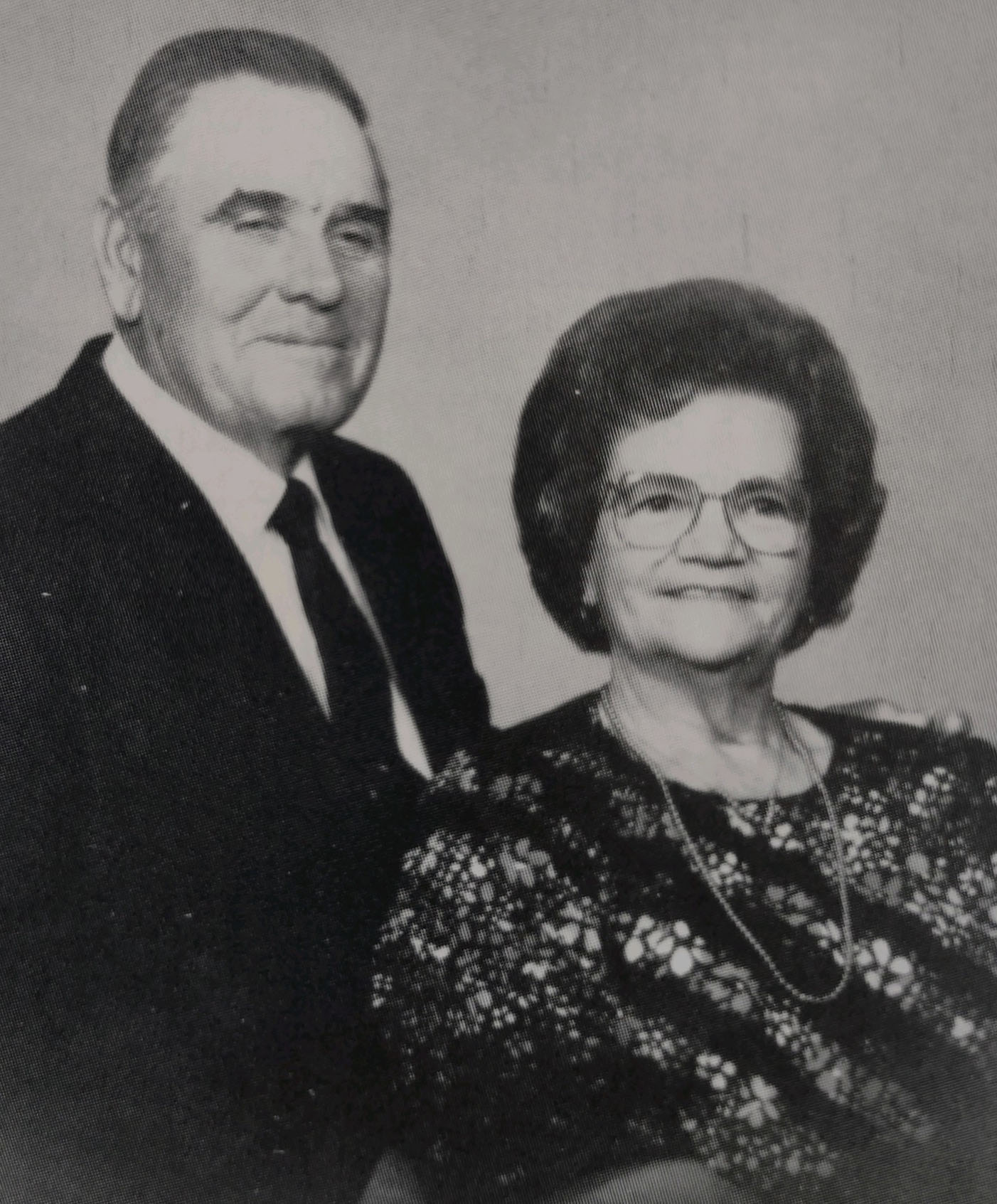
Marvin Edwin Klose (1919-2004) was the second son of Charlie and Fannie (Crooks) Klose. He was born at his grandfather Crooks’ home in Bertram. The family moved to Lampasas in 1920, then returned to Bertram about a year later, and in 1923 moved back to Lampasas County where they remained.
Marvin rode horseback to McCann School, which had about 25 students. Then he attended Ogles School, but most of his education came at Center School, which had two teachers and 60 students.
He married Mildred Lee Canales in Lampasas on April 3, 1943. She had attended Lampasas public schools. After graduating from Lampasas High School, she earned a license in hair dressing and cosmetology from Sellers Beauty College in Fort Worth.
After they married, Marvin and Mildred bought his grandfather Klose’s farm. They added to it over time until it grew to 2,300 acres on which they ran registered Aberdeen Angus cattle, Angora goats, Delaine sheep and operated a dairy.
The Kloses had four daughters, who all live in Lampasas County.
Fifth generation
The daughters of Marvin and Mildred Klose are:
• Anita Darlene – she graduated from Lampasas High School in 1967 and earned a Bachelor of Science in elementary education from Tarleton State College. She began teaching physical education in Lampasas and started the basketball program at Lampasas Middle School. She retired from the Lampasas Independent School District after a 35-year career, but she still drives a school bus twice a day. She also works at Isom Veterinary Hospital in Lampasas with her nephew Trampus. Anita married James Douglas Allen in 1971 at First United Methodist Church in Lampasas. He served as transportation director for the Lampasas Independent School District and now works as a rural postal carrier.
• Becky Carol – she graduated from Lampasas High School in 1969 and earned her Bachelor of Science in elementary education in 1972 from Tarleton State College. She married Charley Wright Isom Jr. in 1973 in Lampasas at First United Methodist Church. They moved to Monroe, Georgia, where both were employed as teachers. Becky taught language arts in Lampasas ISD retired from the district after 34 years. Charley did farming, ranching and dairy work until his death in 2018. Their older son, Trampus, and his wife, Kelli, both are veterinarians. They own Isom Veterinary Hospital in Lampasas. Becky and Charley's younger son, Pepper, and partner Kate Waldrop live in Floresville. Pepper is a head oil driller and travels place to place wherever his employment takes him.
• Janice Kaye – she graduated from Lampasas High School in 1972 and graduated from Tarleton State in 1976 with a Bachelor of Science in elementary education. In 1979, Janice received her Master of Education Degree and completed her Mid-Management in 1990. She retired in 2019 after spending 43 years teaching, all with the Lampasas school district. Janice never married but raised her great-niece, Cecilia Moore, and great-nephew, Devyn Moore.
• Doretha Gee – she graduated from Lampasas High School in 1974, then enrolled at Temple Junior College where she received her vocational nursing degree. Doretha worked at Rollins Brook Community Hospital in Lampasas until she married. She married Robert DeForrest Bohning Jr. in 1977 at First United Methodist Church in Lampasas. Robert graduated from Lometa High School in 1972 and graduated in 1976 from Tarleton, where he majored in agriculture business. They moved to Bay City, where Robert was employed with Phillips Petroleum and Doretha worked for a surgeon. They returned to Lampasas County in 2014. The couple's daughter, Rachael Leanne Bohning Richmond, is married to Curtis Richmond. They have two grandchildren, Gavin and Gage Richmond.
Other fifth-generation descendants
Melvin Klose’s children:
Melba McCulloch -- Temple
M.F. Klose -- Lometa
Dorothy Morrison -- Lometa
Gary Klose -- deceased
David Klose -- Fredricksburg
Fannie Lorene Klose Barker’s children:
Charles Dean Barker -- Lometa
Fannie Ruth Barker Dooley -- deceased
Nancy Burton -- Burnet
