

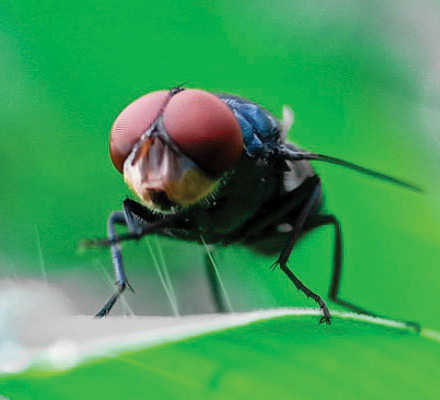
On April 20, the U.S. Department of Agriculture announced the New World screwworm had been found 62 miles south of Texas in the Mexican state of Nuevo León.
The New World screwworm is a parasitic fly that lays eggs in the tissue of fresh wounds in warmblooded animals. Once hatched, larvae feed on the living tissue of the host.
Texas Agriculture Commissioner Sid Miller issued a warning to Texas ranchers after the USDA’s announcement.
“This is now the northernmost active case in Mexico, and that puts Texas squarely in the crosshairs,” Miller said. “The fact that this detection falls within the current sterile fly dispersal zone tells you just how real and active this fight already is.”
The most recent screwworm detection in Nuevo León comes days after the USDA and U.S. Army Corps of Engineers announced groundbreaking on a new sterile fly production facility at Moore Air Base in Edinburg on April 17. The $750 million facility aims for initial operational capability by November 2027, with a production of 100 million flies per week. Its full production capacity would be 300 million flies per week.
The USDA said the facility will complement production of 100 million sterile flies per week at the Panama-based COPEG facility.
Also, the USDA has invested $21 million in Mexico’s Metapa facility that is anticipated to be in operation this summer.
As the New World screwworm inches closer to the Texas border, other states are beginning to act. On Friday, Florida announced it was halting the import of warmblooded animals from the South Texas counties of Zapata, Jim Hogg, Starr, Hidalgo, Webb and Brooks. The Sunshine State has labeled these counties as high risk due to their proximity to the Texas-Mexico border.
“The impacts of New World screwworm are already here,” Miller in a Friday news release. “The extended halt on cattle movement from Mexico alone is straining supply chains, cutting into Texas meatpacking capacity and pushing prices higher for families nationwide. And let’s be clear: This threat isn’t going away anytime soon.”
