


For the last two decades and longer, Mary Helen Dodson has done a deep dive into her family’s history to uncover tales of the past.
Her great-grandfather, Wesley Clark Dodson, was the architect of the Lampasas County Courthouse. On Sunday, Mary Helen Dodson will step inside the historic structure for the first time as part of her book tour on “The Architecture of Wesley Clark Dodson.”
“I’m really looking forward to the trip and have my fingers crossed we will have good weather,” the author said about her upcoming Lampasas visit.
Dodson, an American historian and writer, spent her career at the Educational Testing Service in Princeton, New Jersey, where she crafted exams for students in Advanced Placement courses. Upon retirement at the turn of the century, Dodson teamed up with her brother Rhett to start learning more about her family’s past.
“He started sending me material to review, and I started helping and kind of got hooked on it,” Dodson said. “We were busy filling in the branches on the trees when we stumbled across a book by Robert Borden of the Brazos Heritage Society, and it had a whole chapter in the book about early settlers of Bryan – my great-grandfather and his wife.”
With the help of Borden, Dodson and her brother were able to get in contact with The Texas Collection that had a stash of her great-grandfather’s papers. Initially, Dodson felt Wesley’s past was worthy of a book to pass down to her family members. But after learning of his architectural influence on courthouse construction, she felt his story deserved a wider audience.
W.C. DODSON’S LEGACY
Born in May 1829 in Morgan County, Alabama, Wesley Clark Dodson spent most of his youth growing up in Tennessee. His father, Elisha Jefferson Dodson, was a traveling Methodist minister who died when Wesley was only 14 years old.
After his father’s death, Wesley’s family relocated south to Alabama.
“It was a culture shock for him to go from a middle-class farm in Tennessee down to the Black Belt of Alabama, where there were these large slave holders,” Mary Helen Dodson said of her greatgrandfather. “His brothers-in-law were a wagon maker, a carpenter, and the slave owners looked down on those people because they did servile work with their hands and could easily be replaced by slaves.”
By the late 1850s, Wesley was settled into his career as an architect and builder in Livingston, Alabama. However, his world would turn upside down when the Civil War started in 1861.
Eleven months after the war started, Wesley enlisted in the Confederate Army and fought with Company C in the 40th Alabama Regiment.
Although Dodson said her greatgrandfather was not a supporter of slavery, there were other motives for him to fight alongside his Southern brothers.
“He could have easily thought the South was justified in succeeding, given all the rhetoric at the time. [Many] compared the South’s cause to the Revolutionary War era,” Dodson said.
When the war ended in 1865 and Wesley returned home, he found there was little left for him in the Heart of Dixie.
“When Wesley got back to Livingston, Alabama, where he was living after he got out of the Army, there was nothing there,” his greatgranddaughter said. “There was no work, everybody was leaving, and they decided the best hope for them would be to migrate to Texas and start over.”
Wesley relocated to East Texas but didn’t see the type of society he was looking for in Leon County, so he opted to move farther west to Bryan. After being unable to find work, Wesley moved to Galveston and was successful in setting up a business while leaving his wife, Sarah, and children in Bryan.
In 1867, tragedy struck when an ice storm came through Bryan and his wife developed pneumonia, ultimately leading to her death. Wesley returned to retrieve his children and then settled in Waco where he would receive a job constructing a church.
With county commissioners in McLennan County planning to develop a courthouse, Wesley showed the governing body his plans for the structure. In 1876, he was awarded the contract to design the courthouse.
In 1881, the Texas Legislature authorized bonds for building new courthouses across the state, paving the way for more of Wesley’s developments.
“This opened the way for a flood of courthouse construction,” Dodson said. “All of these counties were being settled after the Civil War, and they needed courthouses. They probably had little 60-by-60 [foot] wooden buildings that needed to be replaced.”
Wesley would go on to design courthouses for 18 counties, including Lampasas.
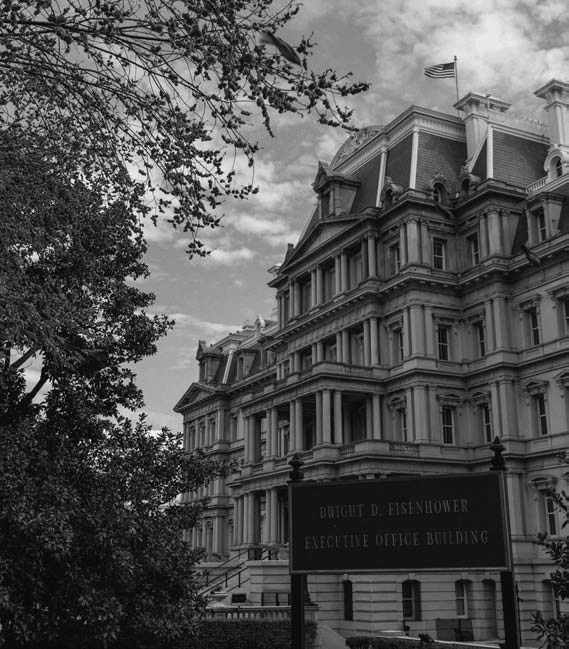
His courthouses were inspired by the Second French Empire style, which had become popular in the 1870s after the development of the State, War, and Navy Building – now known as the Eisenhower Executive Office Building – in Washington, D.C.
CARRYING WESLEY’S LEGACY
Dodson inked a deal with Texas A&M University Press in 2020 to publish her book that covers her greatgrandfather’s architectural accomplishments. For her upcoming book tour, Dodson will make eight stops, including seven at courthouses W.C. Dodson developed that still stand today. The eighth visit will be to Waco, the site of his first courthouse.
The author said she has been pleased to see local historical societies taking interest in her work.
“The courthouse is the center of society. Everybody has very warm regards for the courthouses,” Dodson said. “It’s a symbol of law and order, stability, civilization. When you are coming from out there on the plains and it’s pretty uncivilized, it’s important to have a courthouse to represent the values of the people.”
For her Lampasas visit on Sunday, Dodson will offer a presentation in the courthouse’s upstairs courtroom at 2 p.m. She will be available to sign copies of her book which will be on sale at the event.
The Lampasas County Museum will host a reception with refreshments for attendees after the presentation, and a small exhibit on the courthouse will be available at 303 S. Western Ave.
